
Poet Louise Glück (1943-2023) was born in New York City and grew up on Long Island. She won the 2020 Nobel Prize in Literature. Though she attended both Sarah Lawrence College and Columbia University, she never received a degree.
Glück’s poems are spare, mythic, and beautiful. She doesn’t waste words or images. If poetry is defined as being at its heart “compressed language and meaning,” there are few practitioners better than Glück.
Let’s take a look at her poem, “Early December in Croton-on-Hudson.”
EARLY DECEMBER IN CROTON-ON-HUDSON
   by Louise Glück

Spiked sun. The Hudson’s
Whittled down by ice.
I hear the bone dice
Of blown gravel clicking. Bone-
pale, the recent snow
Fastens like fur to the river.
Standstill. We were leaving to deliver
Christmas presents when the tire blew
Last year. Above the dead valves pines pared
Down by a storm stood, limbs bared . . .
I want you.
Listening With a Pencil and My Ear
Here are the lines that catch my ear
I hear the bone dice
Of blown gravel clicking. Bone-
pale, the recent snow
Fastens like fur to the river.
I love the long-O sound found in the word choices of “bone, blown, bone-and snow” and the way that long, open sound interplays with “gravel clicking” and “fastens like fur.”
Great poetry (and this is a great poem by a great poet) uses assonance and alliteration the way Van Gogh used brushstrokes: for texture and sensuality..
In this poem we see one of the things she excels at: making an ordinary moment transcendent or mythic. I am not sure there are any other poets that could make a poem about something as ordinary as a flat tire so unforgettable, so mythic.
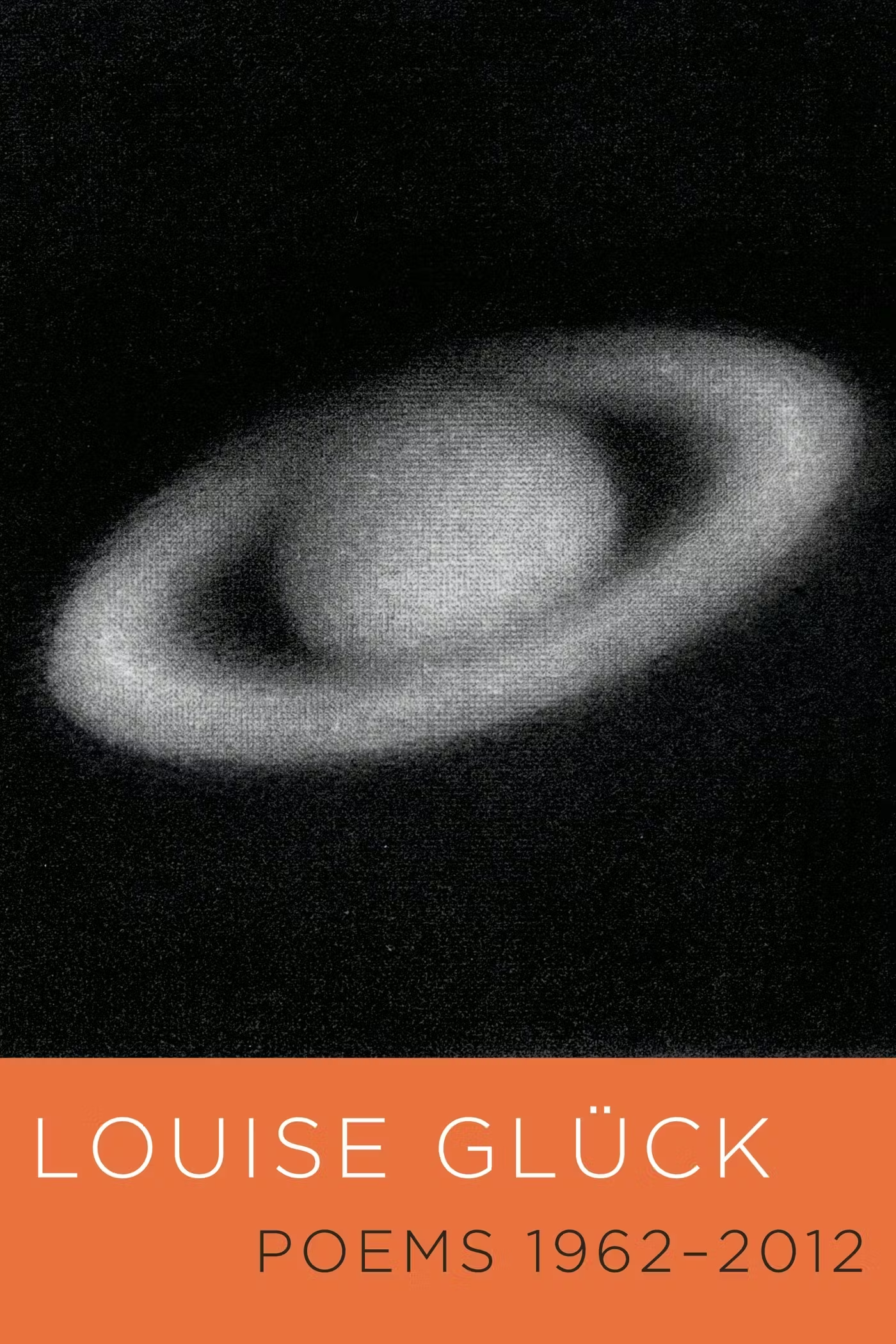
If you have not read much, or any, Louise Glück, do yourself a favor and pick up a volume. You will be glad you did.
 ClimbingSky
Leave a comment