
In August of 1961, I was 16-months old, and lived just between Santa Cruz and Capitola, California. On August 18th of that year in the middle of the night there was an invasion of sooty shearwaters. Apparently confused by the dense fog the birds “invaded” the town, slamming into houses, cars, and stores. Windows were broken and the streets were littered with dead birds and regurgitated fish.
My parents told the story so often over the years that I do not know if the vague memories and impressions I have of birds littering the street and the court of our apartment house are mine, or simply memory-images created by the stories.
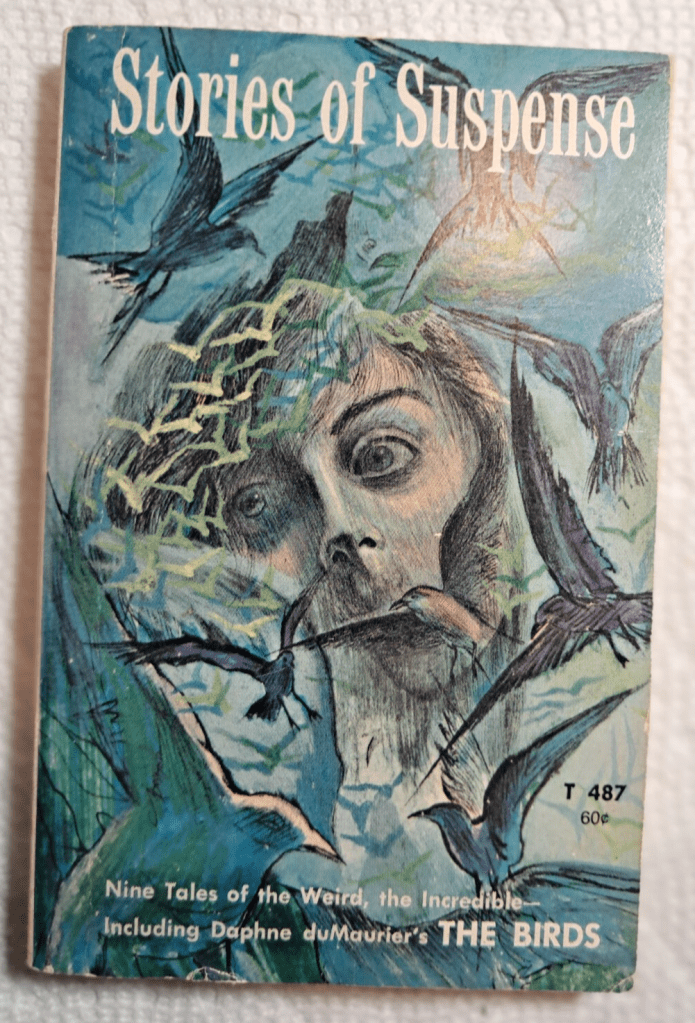
The events of August 1961 and Daphne Du Maurier’s short story, “The Birds,” are said to be the inspiration behind Alfred Hitchcock’s famous movie of the same name.
The story is set in postwar Cornwall and follows Nat Hocken, a farm worker who notices unusual bird behavior after a sudden change in the weather. Birds begin gathering in massive flocks and launching unprovoked, coordinated attacks on humans. Nat realizes this is not a random incident but a global natural rebellion, with birds acting on instinct as if driven by some greater force.
At its core, du Maurier’s story is an allegory about the fragility of civilization and the illusion of control over nature. Unlike Hitchcock’s later film, which emphasizes romance and spectacle, du Maurier’s story is tense, claustrophobic, and apocalyptic. Think Cormac McCarthy’s The Road.
As anyone knows who has read her novels like Rebecca or Jamaica Inn, Du Maurier is a master of tone and tension. Off the top of my head, I cannot think of anyone better. I highly recommend “The Birds,” and all her work..


Leave a Reply