“Sometimes the songs that we hear are just songs of our own”
~cf. “Eyes of the World” by Robert Hunter & Jerry Garcia
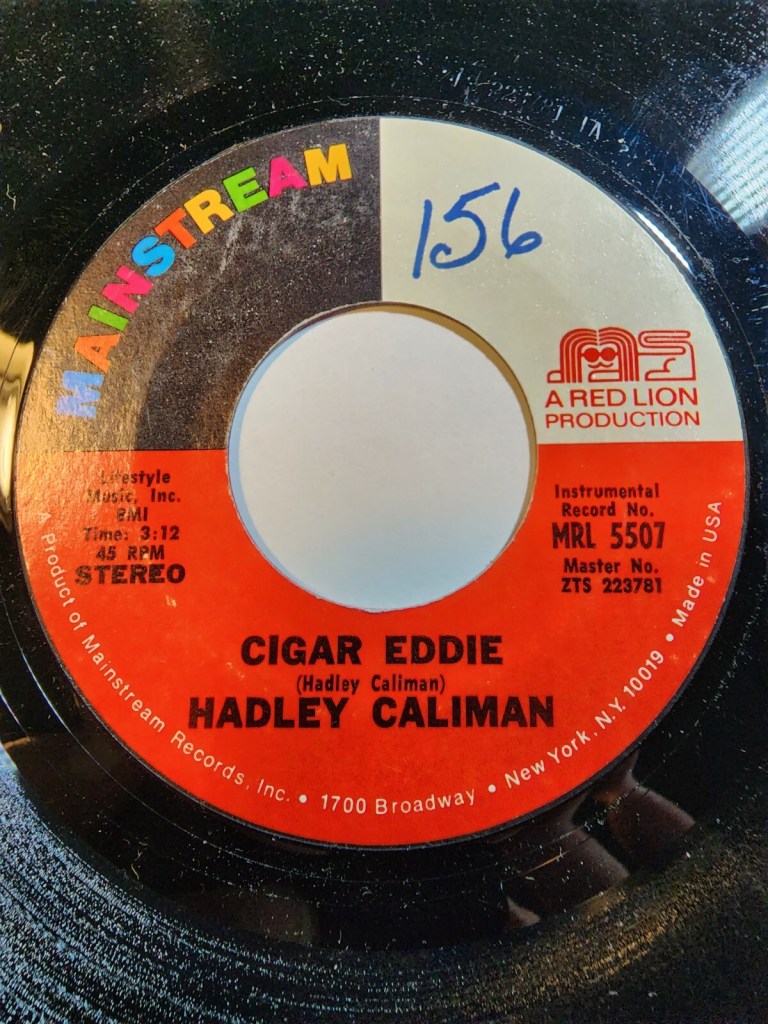
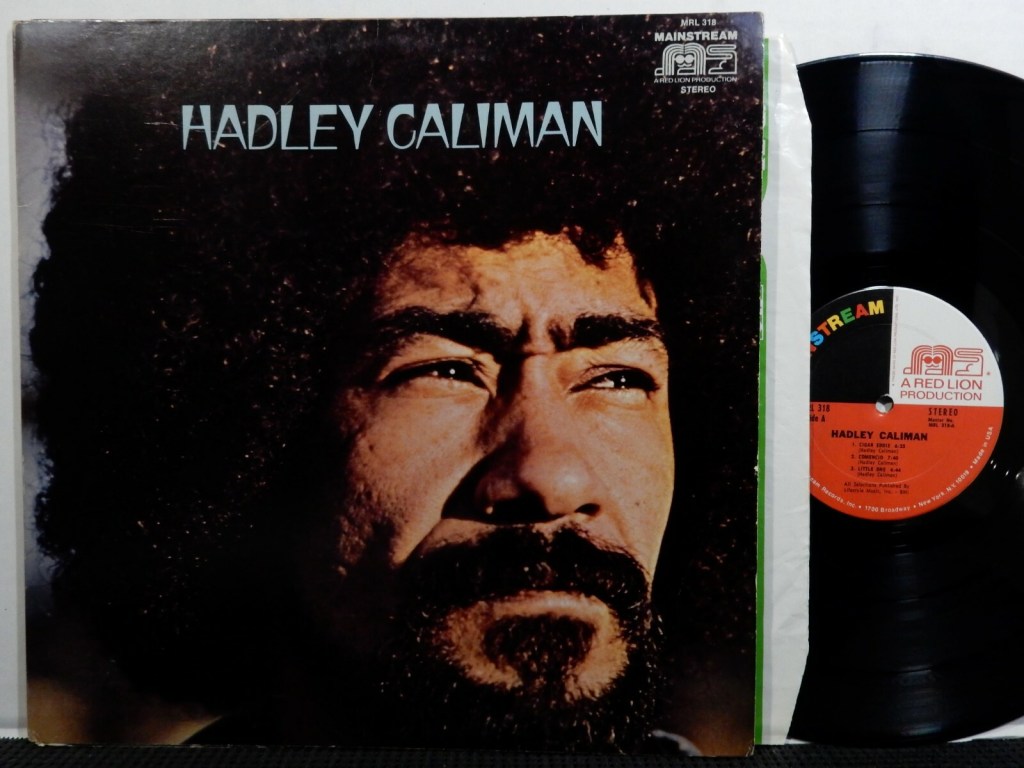
Just shy of 100 albums into my album-listening project—which I have come to call “My Jazz Project”—I find myself listening over and over this week to a single track: “Cigar Eddie” by Hadley Caliman, from his self-titled album Hadley Caliman.
After the first dozen or so listenings, I started asking myself these questions:
Why, after a couple hundred tracks over the past few months, does this one particular song by a relatively unknown saxophonist so connect with me?
Can this one song help me better understand what my tastes in jazz are?
With those questions in mind, I started a deep dive into this rather obscure track that I have found myself playing on repeat. Why does “Cigar Eddie” keep teasing my ear without exhausting it?
1. Let’s Begin with the Bass
Early in my jazz project, I quickly discovered (or “rediscovered”) that I connect with music best when I connect to the bass. It is one of the most consistent qualities of the albums that have most resonated with me.
The bassist on “Cigar Eddie” is Bill Douglass. He is new to me (though I see from a website that he did appear on a number of recordings by Marian McPartland, a pianist I have spent time with).
On “Cigar Eddie,” he is leaning forward into the music without rushing. In that way, he reminds me of my favorite bassists: Israel Crosby, Paul Chambers, Sam Jones, and Ron Carter. Douglass isn’t simply “keeping time.” He helps create the personality of the tune.
2. The melody is sneakier than it first appears
This is probably the biggest thing. The melody isn’t one of those themes that announces itself. It sneaks up on you, worms its way into your head.
The melody has a kind of “sideways quality.” You think you have caught it… and then it bends slightly. It has personality.
3. It’s bluesy without actually being “a blues” tune
“Cigar Eddie” isn’t really a blues tune, but it does have the attitude of the blues.
One critic I found described the piece as a hard-bop tune that practically smells of “scotch and cigarette smoke.” Another called its atmosphere “old-school boogaloo.” The tune has a physical presence. You feel it the way you feel the blues.
4. And then there is Caliman’s tenor
His tenor is rougher and “dirtier” than I think I usually like, BUT there is on this tune the economy and intentionality that I do most admire in a jazz instrumentalist.
One critic described Caliman’s tone as having “carefully crafted rough edges,” while another praised his “burnished tone” and fluidity.
In the end, on “Cigar Eddie,” he doesn’t immediately try to conquer the tune; he eases in, and ultimately it is an ensemble work. His tenor floats above the rhythm section in the way that always causes me to lean into a tune.
5. Finally, the Guitar
John White’s guitar provides the final piece. It adds texture to the whole work. With his warm and bluesy sound, you end up with a great ensemble making music of a wonderful, accessible density.
So Why & So What
Why, in a project that has focused on the art of the complete jazz album experience—a project that so far has meant at least three focused listening sessions for 96 albums (and many dozens more that I realized I could not commit to)—do I suddenly find myself pausing on a single track from an album that overall feels uneven?
Because in the end, “Cigar Eddie” embodies what I have discovered about my personal listening preferences after diving into so many different jazz albums. I clearly have a preference for:
- Ensemble work where listening is more important than anything else
- Soloing with restraint (for me solos can easily distract from the ensembles collective issue, easily taking me out of the groove)
- Bass-driven jazz (“Guitar Eddie” begins and ends with Bill Douglass’ wonderful bass)
- Non-percussive rhythm sections and NO drum solos (Drum solos always takes me out of the groove of any tune)
- Jazz guitar (right smack in the middle of the track when things seem like they are on the edge of losing control John White’s wonderful guitar returns to reground the ensemble and the track)
- Music with internal tension and risk
- Not critically perfect or acclaimed performances (but rather performances that just “connect with me” in some important way)
Nobody on “Cigar Eddie” is fighting for the center. It is what I like best: five people sitting around a table—a conversation, not a competition of superstar soloists. It is ultimately what I find myself connecting with again and again as I listen to various jazz albums, and why I find I am listening so much to this particular track.
Is it a great song? Probably not. But because, as Jerry and Robert Hunter say, “Sometimes the songs that we hear are just songs of our own,” it is a great song for me.
How many times have I listened to “Cigar Eddie” now? Let’s just say that on Spotify, my most listened-to track before now was “Simple Man” by Lynyrd Skynyrd, with 47 listens over a number of years. Suffice it to say that “Simple Man,” is easily in danger of being supplanted.
I encourage you to give “Cigar Eddie” a try and let me know what you think.


Leave a Reply